


Photos by Jacy Teo
MA Music Therapy series: Cassandra Chng on bridging mental health provisions in a heartland node
3 Nov 2026
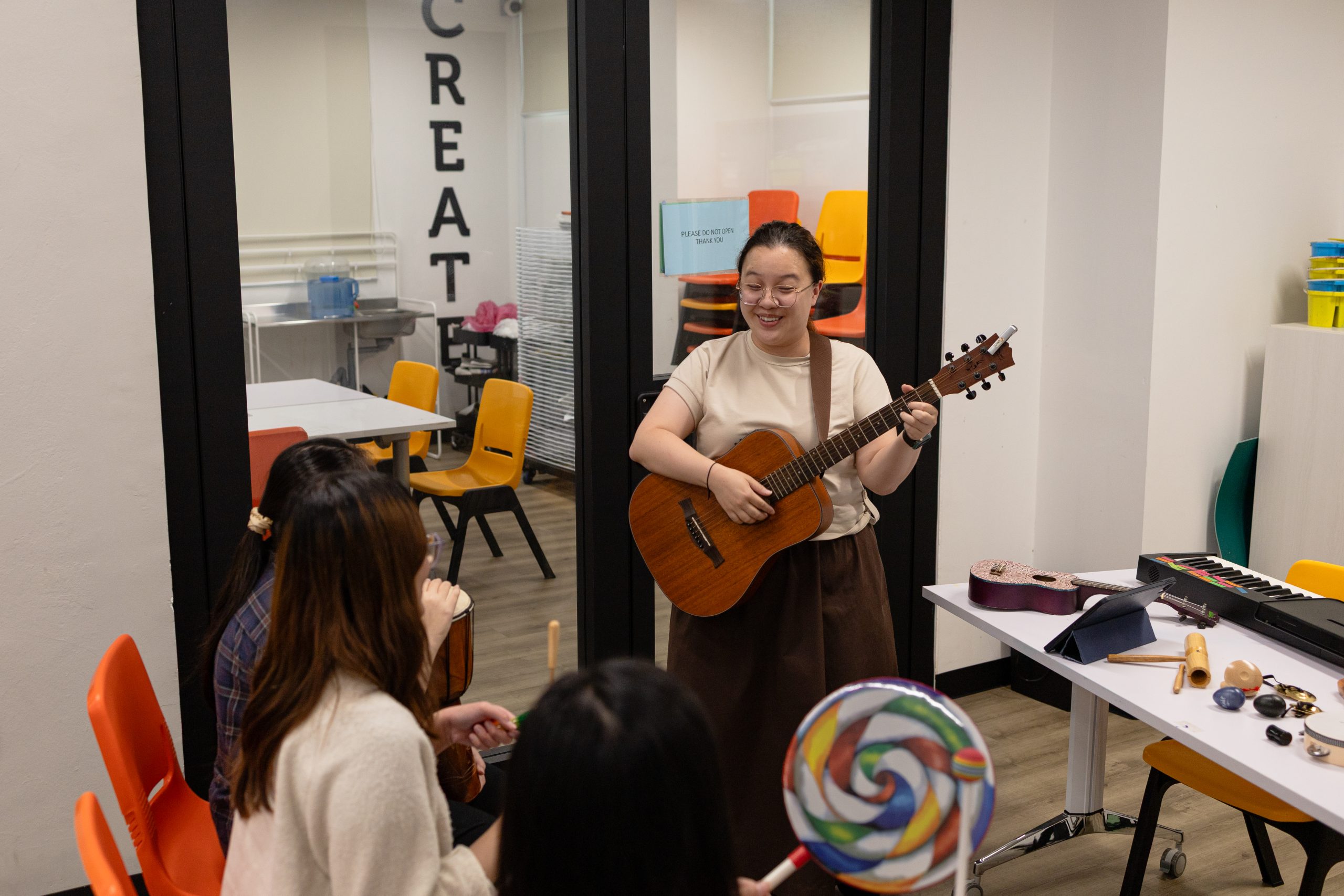
Long a believer in the power of music, Cassandra Chng first searched for an education in music therapy in 2014. At that time, no local programmes for it existed, so she put her dreams on hold.
She pursued studies in other disciplines while continuing to teach music on the side, and eventually became a full-time preschool music teacher. In her four years on the job, Cassandra would fine-tune her lessons to better serve different children’s needs, noticing that music was providing alternate ways for them to express thoughts and needs that regular language sessions could not accommodate for.
Right around this time, LASALLE announced the launch of Singapore’s first MA in Music Therapy programme, opening up a space for Cassandra’s hypotheses about the benefits of musical encounters to blossom in research-practice within Singapore’s unique multicultural context.
Cassandra is now graduating as part the first cohort of music therapists trained entirely in Singapore. On top of that, she graduates just as the Association for Music Therapy (Singapore) has rolled out their Professional Registration Framework for Music Therapy, meaning that registered practitioners will now carry the title Registered Music Therapist – Singapore (RMT-S).
As part of a series following newly minted music therapists at their respective work places, we spoke to Cassandra about the unique challenges working in a community setting, and how the programme readied her to tackle them.
Cassandra Chng, music therapist at the Singapore Association for Mental Health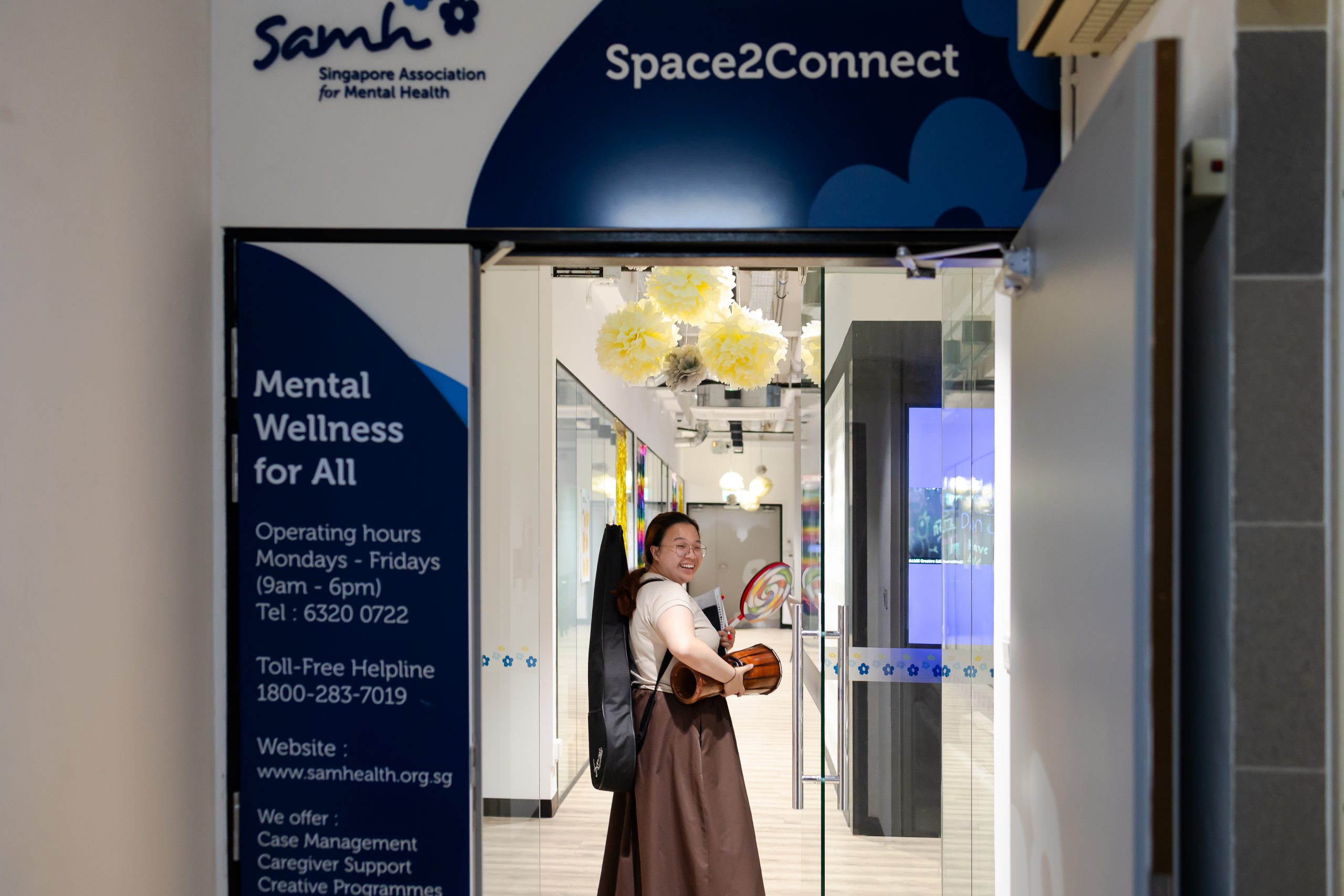
Cassandra did her final placement at the Singapore Association for Mental Health’s (SAMH) Space2Connect centre where she has worked full-time since graduation. Occupying the entire 3rd floor of a HDB block under the Public Rental Scheme, the centre serves as a neighbourhood node, open to use by other SAMH centres for their rehabilitative work as well as for hosting community events.
What is a typical day like as a music therapist in SAMH?
My schedule at Space2Connect can be unpredictable and varied—it depends on who needs me and I sometimes move between branches as needed.
I mainly work with other therapists in the SAMH Creative Therapy housed within Space2Connect, including those who specialise in art therapy and dance movement therapy. The individual modalities share a common language, and since my inclusion, we have been working to see how it all comes together.
Through internal referrals, I visit youth centres to work with clients there. These sessions are usually carried out in partnership with a case worker so that we can coordinate my support for the client. I also visit primary and secondary schools as part of teams delivering SAMH’s Resilience Series—not formal music therapy sessions, but therapeutic music activities that make time and space for cognitive engagement and socialisation.
Some days, I might visit a client at their home in cases where they might have mitigating circumstances that prevent them from leaving the house.
When needed, I also support SAMH’s outreach events to promote community mental health, and these might take the form of corporate events such as company wellness initiatives, or our ‘Eat Move Create’ platform which provides free wellness programmes for the general public with and without mental illness.
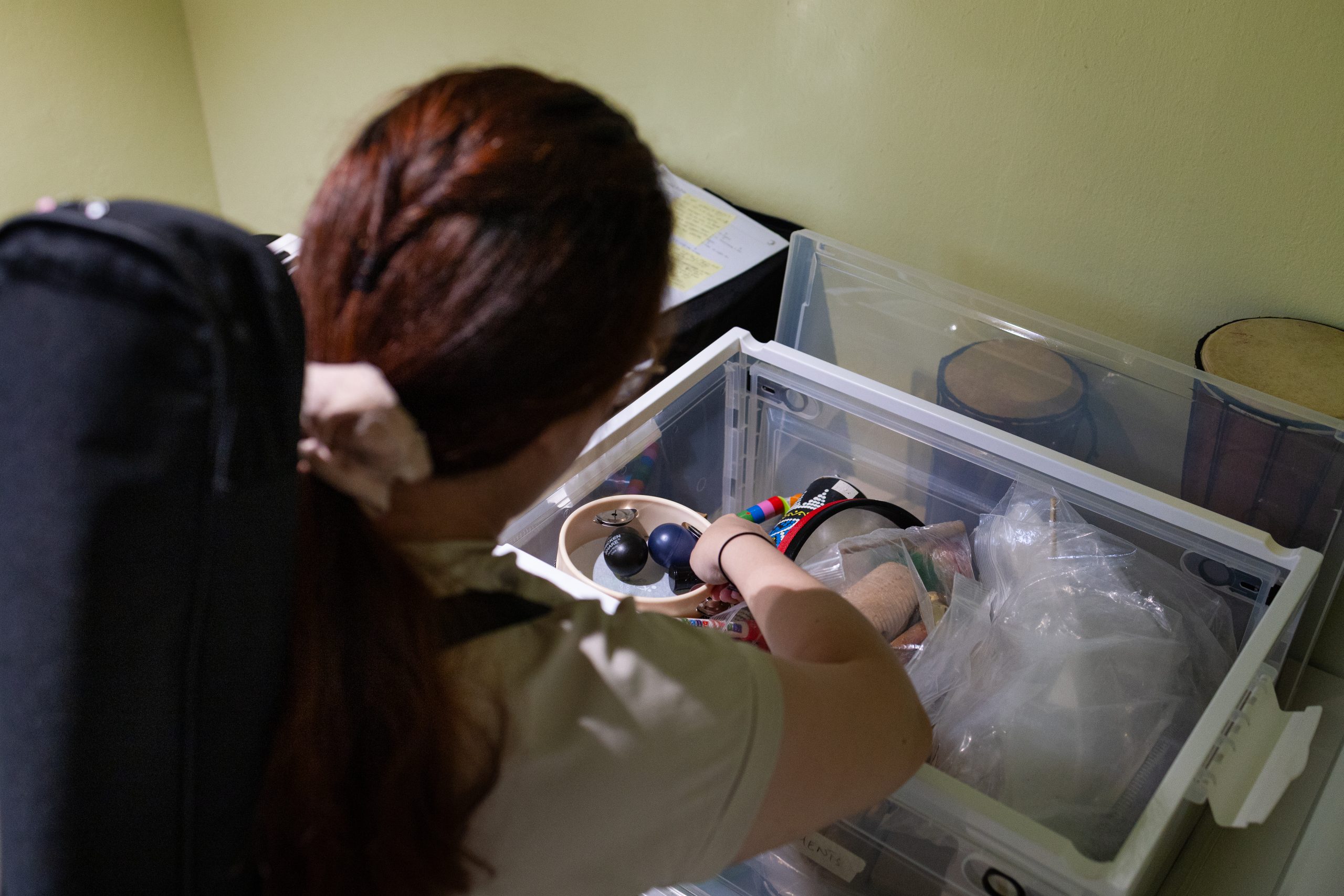
Cassandra collects the instruments she would need depending on the nature of the session.
What is it like working in a community setting?
In a community setting, you see a wide range of clients and are sometimes sent to many different contexts, so there was definitely an adjustment from my earlier placements in a hospital and nursing home.
Working with clients from a wide range of ages, music therapy has to be applied differently for each client. I have to consider what works best based on each clients’ comfort level, verbal ability, and/or level of mobility, such as whether the session should involve active music-making or passive music activity (i.e. listening).
At Space2Connect, you work alongside art therapists and dance movement therapists. How has that been?
I’ve been able to explore how bringing in music therapy can add new dimensions to the existing art therapy and dance movement therapy sessions.
With a newfound understanding of why and how music as a modality could work in a therapeutic setting, Eat Move Create art sessions may make more deliberate choices of music playing in the background. I’m sometimes also roped into dance movement therapy sessions to provide live accompaniment on the spot to facilitate changes in tempo, so there’s an added facet of responsive, adaptive musical engagement.
What are the strengths of music as a modality in your setting?
Where words don’t work and talk therapy is not possible, the creative therapies might help fill or bridge those gaps in expression.
Even then, verbal processing in creative therapies might still be daunting to a self-conscious child, so using preexisting pop music lyrics can make expression so much easier. I have had clients who didn’t want to talk at regular therapy, but lit up when there was a keyboard.
There is a range of clinical applications for music therapy—from music for wellness to neurological rehab. A neurotypical client might be led to drum to the beat, with the number of beats increased per round to increase sustained attention or support turn-taking, or even hone math processing through rhythmic pulses.
On the other hand, a session for a client suffering from schizophrenia would require more structure and rules, as music is a means to help them work on their cognitive functioning that transfers skills to everyday life.
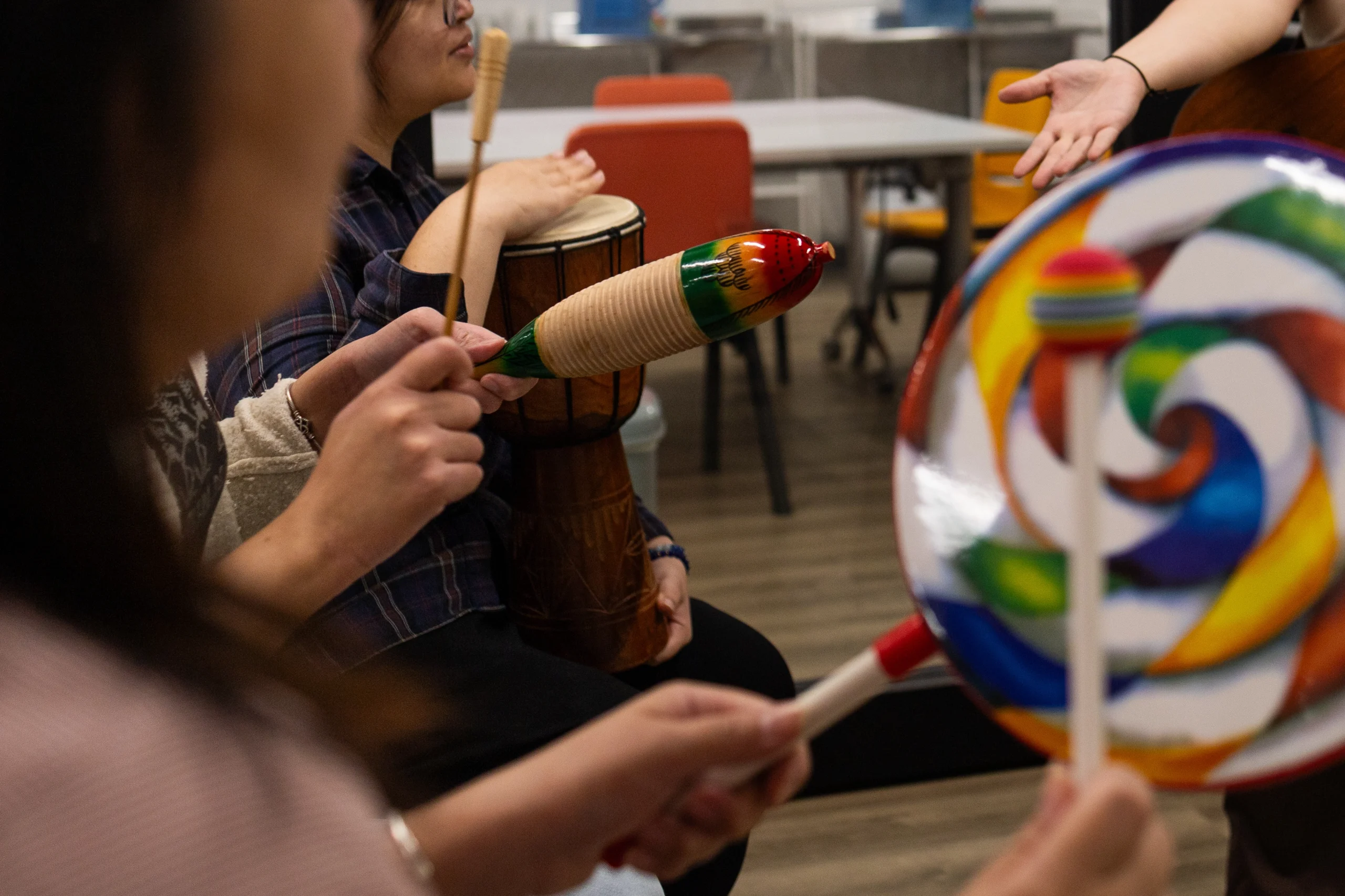
How a drum session might look like in a group scenario.
How has your training at LASALLE prepared you for professional life?
Singapore has a rich diversity in language and demographics. To serve the community, you have to learn songs of different languages and songs for different ages as well.
My training in the MA Music Therapy programme gave me the confidence to interact and conduct music therapy sessions with clients of various ages, ethnicity and languages. During the training, I was as excited to learn songs outside of my comfort zone and how to apply them for clinical musicianship as opposed to just entertainment purposes.
I will say though, that I’ve realised you have to be prepared for anything—there are seniors who ask for Taylor Swift and youths who ask for Russian classics. Teenagers especially are a big wildcard.
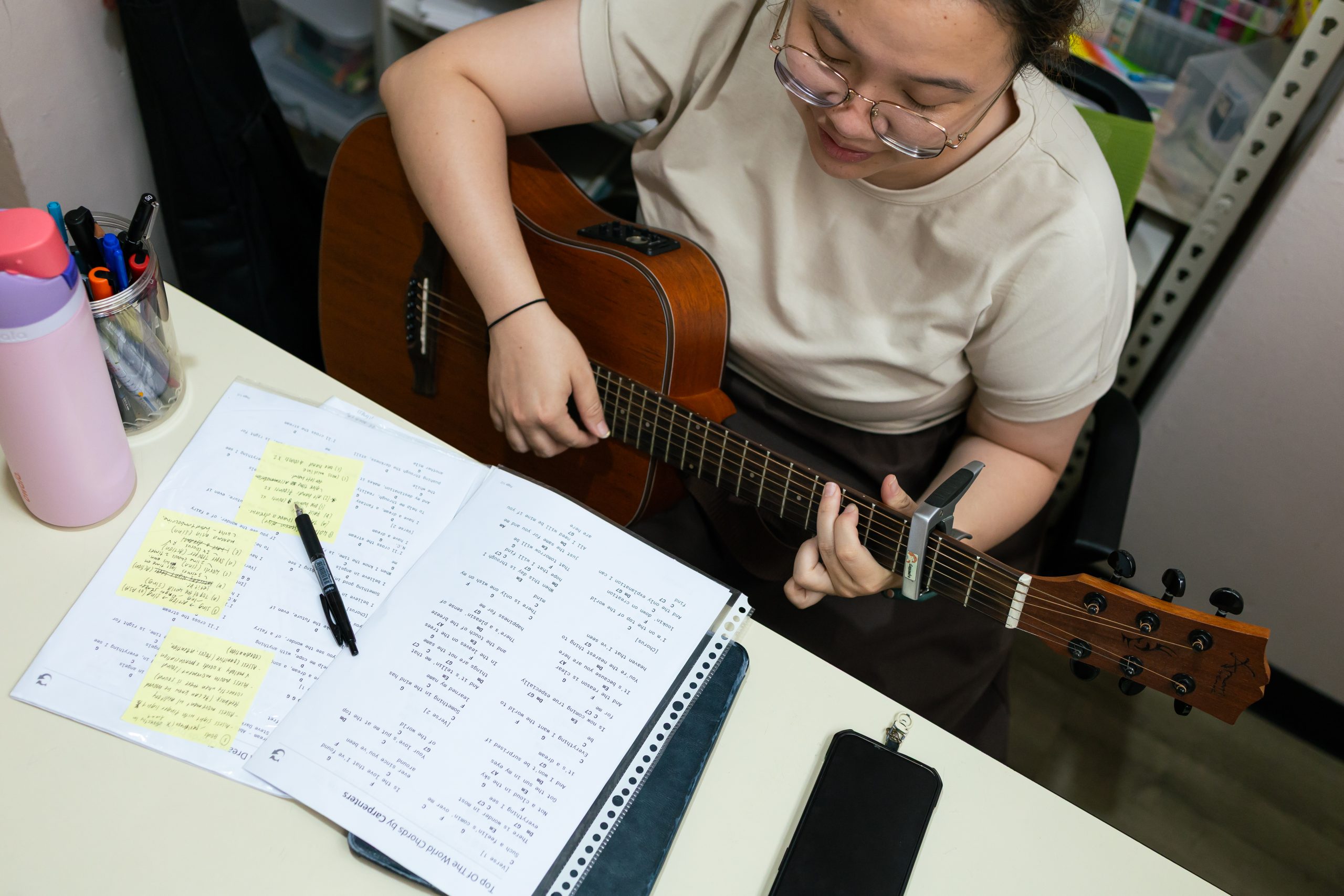
Cassandra practises a repertoire of requested songs, each of which have their own meaning to her clients.
What are your hopes as a new music therapist?
At my placement at KK Women’s and Children’s Hospital, children and youths would receive music or art therapy for social enrichment, but once these clients were discharged from the hospital, they lost access to that therapy.
I want to bridge that transition from the hospital back to home and school. It’s my hope that working in a community setting which is located within a residential area will go towards plugging that gap.
Any advice for people considering applying to MA Music Therapy?
Do it! You’ll go through a programme where your lecturers intentionally and progressively equip you, semester by semester, to ensure that you are ready to be a music therapist upon graduation. The programme even prepares you for non-clinical settings, to ensure that you can be confident speaking in public and making presentations about music therapy.
You’ll meet classmates who will train and grow alongside you, and be reminded that the field of music therapy is truly one of community and peer support. You’ll go from asking questions to confidently being able to answering your peers’ questions and supporting each other through every clinical placement and milestone.
Music can do so much. May you experience it for yourself, so you can see how it can be used beyond yourself, entertainment and teaching.
Be part of profession which uses music interventions within a therapeutic relationship that aims to provide functional, educational, rehabilitative or well-being outcomes. Get a first-hand look at LASALLE’s MA Music Therapy through The Postgrad Experience and explore the practice and research cultures of LASALLE’s MA programmes.
Sign up for The Postgrad Experience Apply now
Related stories
What happens after art school
MA Music Therapy series: Joanne Lau on growing a music therapy programme in a nursing home
30 Oct 2026
Launched in 2023, LASALLE’s MA in Music Therapy programme is the first of its kind in Singapore, allowing aspiring practitioners to be trained locally. Consequently, the programme has placed great …
What to expect in LASALLE, In conversation with
In conversation with: MA Design graduand Pann Lim on the simple question that led him to pursue an MA
23 Oct 2026
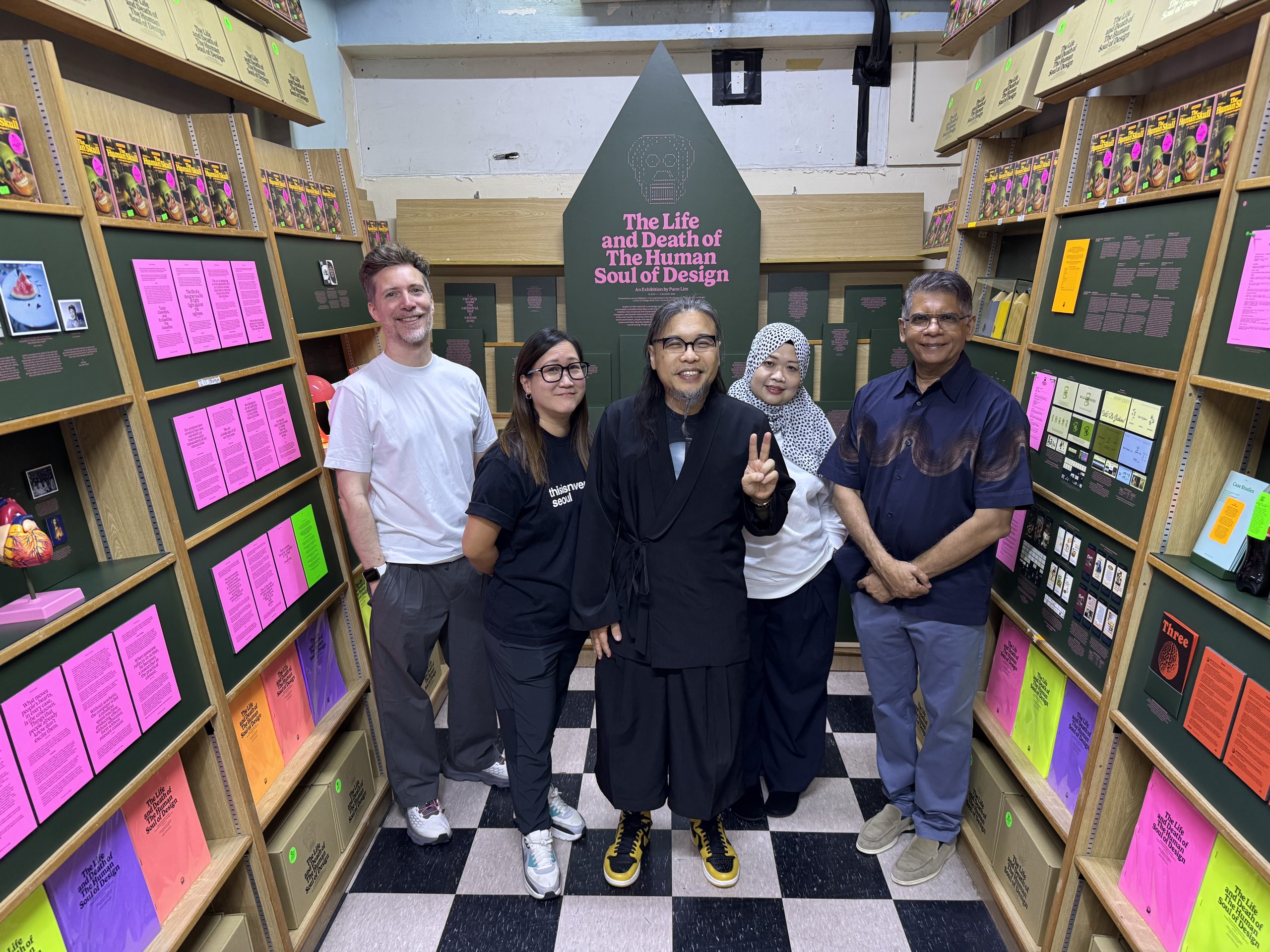
Despite having 28 years of design practice—and countless design accolades—under his belt, creative director Pann Lim found himself stumbling in recent years over a simple question from young students and …
Trip report
Wandering and wondering at humanity: BA (Hons) Arts Management represents at Ars Electronica 2026
13 Oct 2026
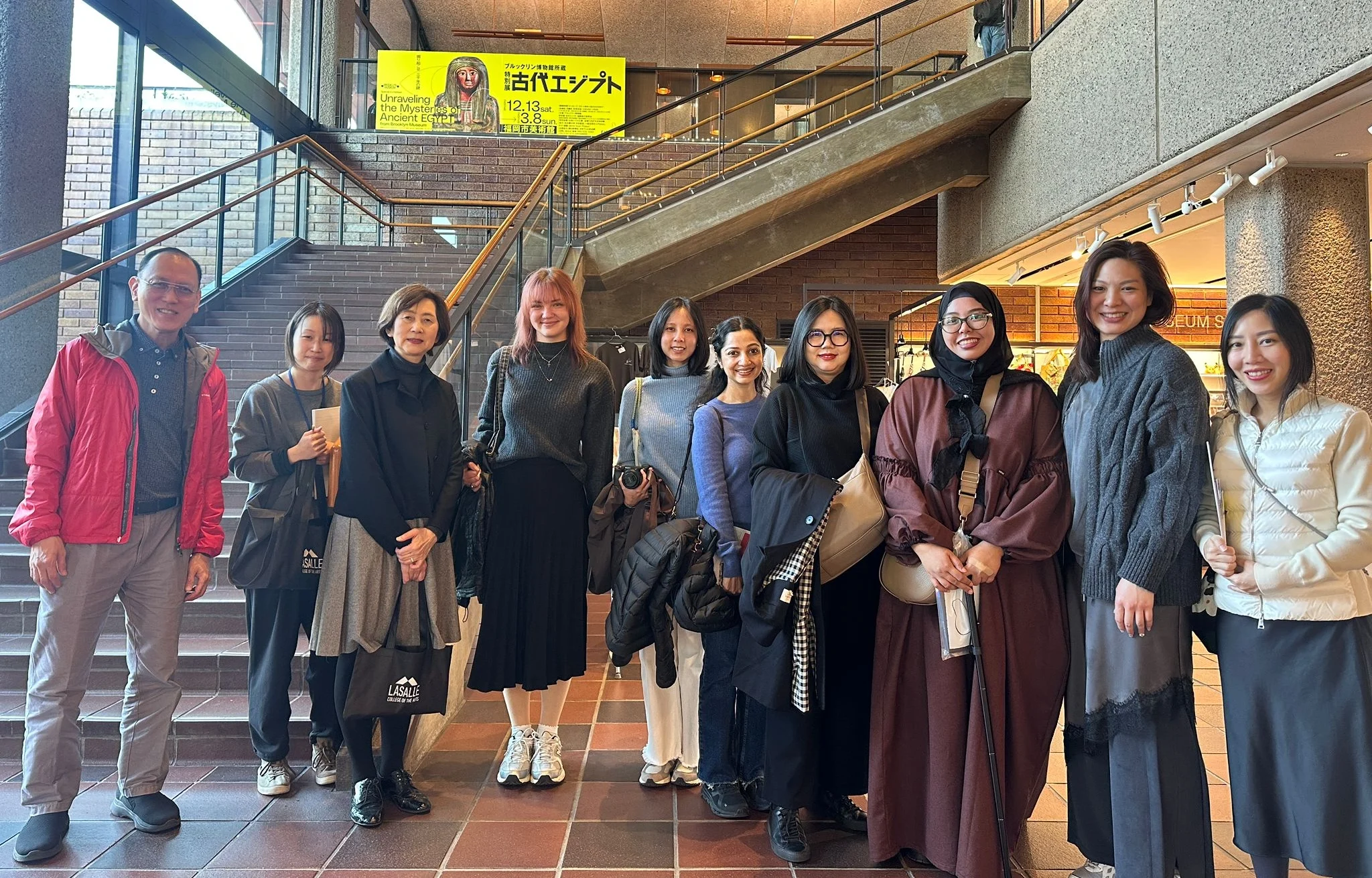
Trip vignettes by Amila Khairana Binte Abdul Rahmat, Angela Kristie Rustham, Muhammad Haris Bin Muhammad Shahril, Shernice Sah Jia Yi and Vina Tan Ding Kiang. … Before this, Echoes of …
In conversation with
In conversation with: Kyle Balda, director of Minions, Despicable Me 3 and The Sheep Detectives
7 Oct 2026
In June 2026, the Puttnam School of Film & Animation, in partnership with Cartoons Underground, hosted animation director Kyle Balda for a masterclass with students. Balda is a director and …